
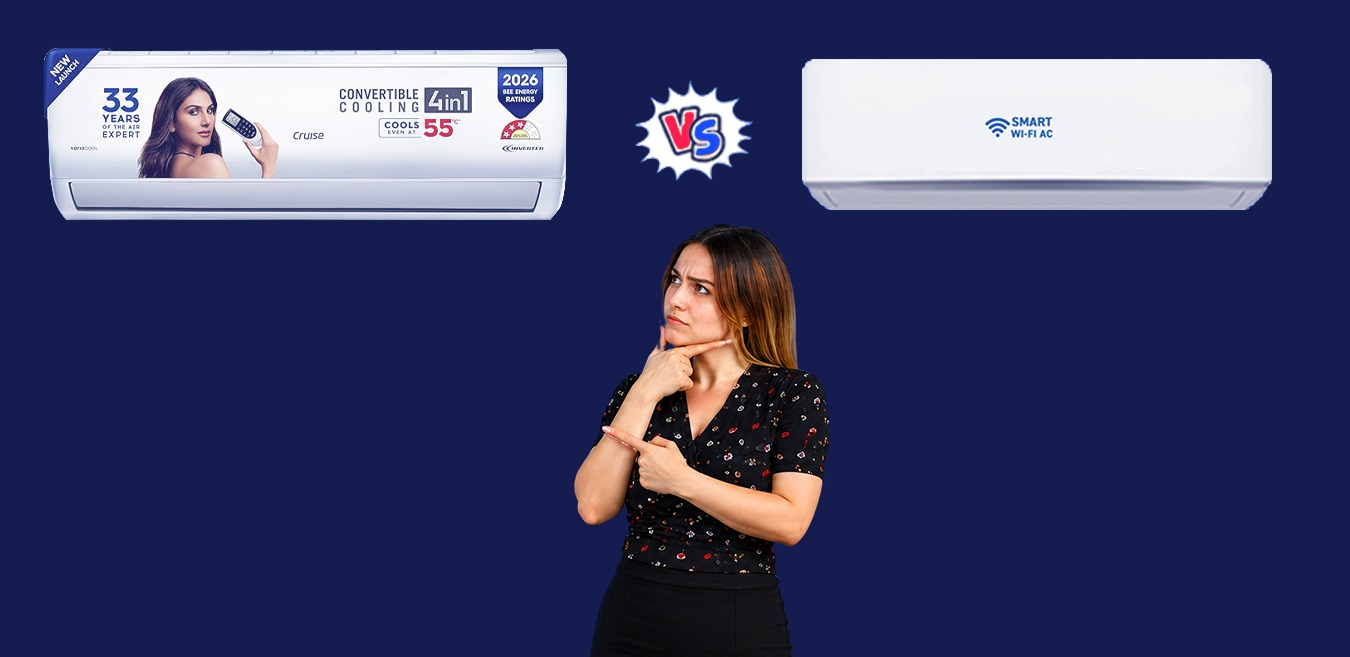
The summer temperatures in India are compelling households to upgrade their cooling solutions more rapidly than ever. Today, dozens of AC models are on the market and the main question that buyers have to answer is whether to purchase a WiFi smart AC or a trusted Inverter Split AC. They both have powerful benefits, yet they are used for different purposes. The following is a clear breakdown to assist you in making a wise decision before spending your money this season.
What Makes an Inverter AC Different?
A standard AC runs the compressor at full speed and switches it on and off repeatedly. An Inverter Split AC works differently. It adjusts the compressor speed based on the cooling load required in the room. This means less energy wasted, more consistent temperature, and quieter operation throughout the day.
According to the Bureau of Energy Efficiency (BEE), inverter-based models can save up to 30 to 50 per cent more electricity compared to fixed-speed air conditioners. For Indian households running ACs for five to eight hours daily through a long summer season, those savings add up to a significant amount on the annual electricity bill.
What Is a WiFi Smart AC?
A WiFi smart AC takes inverter technology a step further. It connects to your home Wi-Fi network and can be controlled through a smartphone app or a voice assistant like Google Assistant or Amazon Alexa. Key features typically include:
• Remote on/off control from anywhere via mobile
• Scheduling and timers to automate cooling routines
• Energy usage monitoring through the app
• AI-based temperature adjustment based on usage patterns
• Voice command support for hands-free operation
These features make smart ACs particularly convenient for working professionals, nuclear families, and anyone building a connected home setup.
Which One Should You Buy?
Go for a Smart AC If:
• You travel frequently or work long hours outside the home
• You want to monitor electricity consumption in real time
• Your home already uses smart devices or voice assistants
• You prefer automating daily routines including cooling schedules
Stick with a Standard Inverter Model If:
• You want reliable, energy-efficient cooling without extra features
• Your budget is fixed and connectivity features are not a priority
• You prefer simple controls and low maintenance requirements
What About the 2026 BEE Star Rating?
Under the revised 2026 BEE norms, both smart and standard inverter models are evaluated on updated ISEER values. This means the efficiency bar has risen for all categories. When comparing models, always check the ISEER rating on the BEE label along with the star count to get the full picture of energy performance.
Final Thoughts
Choosing between a WiFi smart AC and a standard inverter model comes down to your lifestyle and priorities. If convenience, remote access, and smart home integration matter to you, a WiFi-enabled model is worth the extra investment. If your focus is on efficient, dependable cooling at a sensible price, a quality inverter unit delivers everything you need without the added complexity. Either way, prioritise BEE star ratings, tonnage matching your room size, and a trusted brand for the best long-term value.